Longer lives bring greater opportunity, but they require a foundation of financial stability, safe housing, nutritious food, access to care, and protection from exploitation. That foundation is becoming harder to secure, as Americans enter decades of extra life without the savings or support systems needed to sustain them.
Personal Finances. Nearly half of retirees who return to the workforce do so out of economic necessity. The average Social Security benefit of roughly $2,071 per month falls well short of covering basic living costs, and median retirement savings for many older Americans hovers near $40,000.
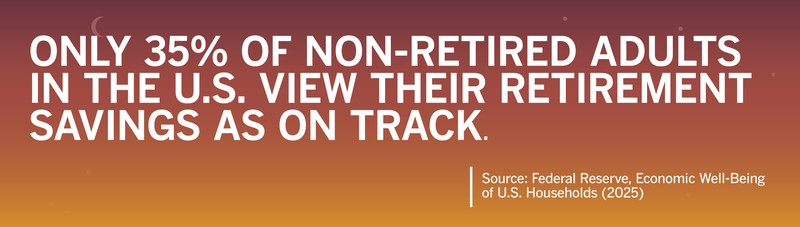
Those averages hide sharp differences. Financial insecurity falls hardest on communities of color, indigenous communities, women, and LGBTQ+ older adults, whose experience of wage gaps and exclusion from savings vehicles becomes, in retirement, a lifetime of financial shortfalls.
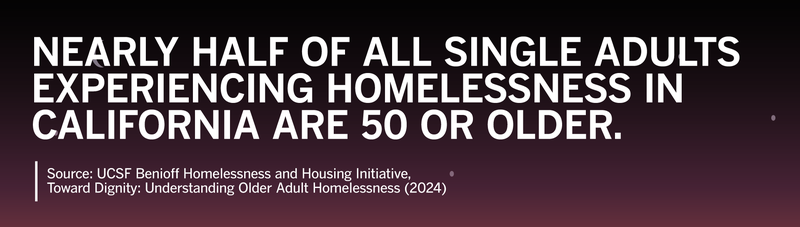
Housing Precarity. Senior housing occupancy has surpassed 90% in major markets while new construction sits at decade lows, and unhoused older adults are now the fastest-growing homeless demographic, including in San Francisco.
Nutrition. Nutrition commands the single largest share of national aging-services expenditures. Food security determines everything downstream. Oral health is a related, similarly overlooked determinant. Poor dental health is linked to dementia and cardiovascular outcomes, yet older adults in affordable housing often have no access to consistent care.

"The most money that's spent in aging social services is on nutrition services. It's hard to feel valued and engaged if you're starving. You need to be able to eat before you can do anything else."
~ L. Michael Costa MPP, Commissioner, California Commission on Aging
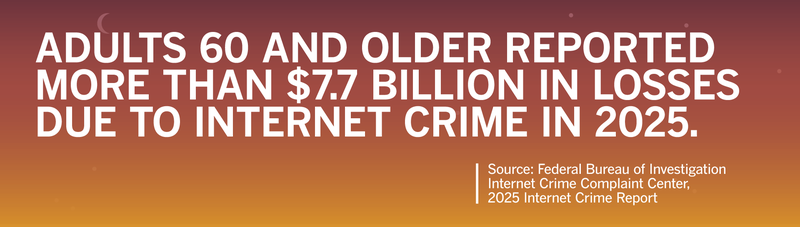
Technology: Access and Exploitation. Security increasingly means protection from digital exploitation. Financial fraud targeting older adults has surged in recent years, with AI-powered voice cloning, cryptocurrency scams, and romance fraud among the fastest-growing threats. One person we spoke with described a neighbor, an isolated 75-year-old gay man, who was conned out of his life savings through an online romance scam. Even after repeated attempts to end the relationship, he kept getting drawn back in. He finally asked our interviewee to help him disconnect from the internet entirely, leaving him more isolated.
A larger, more widespread challenge is basic access itself. As government and health services move behind apps and online portals, older adults without digital literacy or affordable connectivity are effectively locked out, relying on grandchildren and other creative means to navigate basic tasks. Another interviewee shared that she got her 80-year-old client a smartphone so the client could receive texts and photos from her grandkids. Then she calls them back on her landline because “this smartphone is too smart for me.”
How Philanthropy Can Help
The public safety net—Social Security, Medicare, Medicaid, and the Older Americans Act—remains the backbone of support for millions of older adults. But rising costs, demographic change, workforce shortages, and digital barriers are exposing gaps that public systems alone cannot address.
Philanthropy can play two critical roles. First, by providing reliable, ongoing support—not just crisis funding—to organizations already helping older adults navigate these challenges. Second, by acting as risk capital, backing innovative approaches before public systems or traditional funders are prepared to do so.

This work may take the form of direct service, community-based support, advocacy, systems change, or other efforts that help older adults maintain security, independence, and dignity as they age.
Examples could look like:
- Financial security and benefits access: helping older adults maximize income, access public benefits, avoid debt, build financial resilience, and prepare for retirement.
- Housing stability and aging in place: expanding affordable housing options, preventing homelessness, supporting home modifications, and helping older adults remain safely in their communities.
- Nutrition, health, and caregiving supports: ensuring access to healthy food, addressing overlooked determinants of health, and supporting family and professional caregivers who make independent living possible.
- Digital inclusion and protection from exploitation: building digital literacy, expanding access to technology, and protecting older adults from fraud, scams, and financial abuse.
- Advocacy and systems change: strengthening the public policies, funding streams, and community infrastructure that older adults rely upon every day.
While healthcare is central to the experience of aging, this theme is not focused on clinical care, disease-specific research, or medical innovation. Instead, we are focused on the social and economic factors that shape how people experience longer lives.
Security is the floor. What people build on top of it is community.
NEXT: Community →