
The Future of Aging Starts Now
Watch the full Organization Night recording.
Aging well isn't simply a matter of individual planning or good fortune. It depends on the communities we build, the systems we create, and the opportunities people have to remain active participants in their own lives.
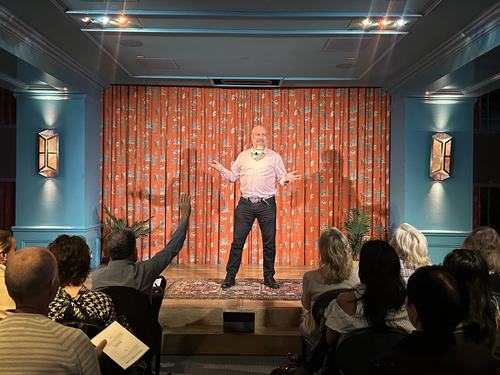
That was the message at Battery Powered's October 20 Future of Aging Organization Night, where members heard from eight organizations working to help people grow older with greater security, agency, and belonging.
For many older adults, aging in place begins with the basics: housing, food, and health care. But meeting those needs is only part of the story. Cathy Davis of Bayview Senior Services described how the organization has spent 55 years responding to the needs of older San Franciscans, particularly in the city's Black community. Its work ranges from affordable housing and food access to a planned community pharmacy in a neighborhood with none. And its senior centers are anything but quiet, with domino games lasting until 3 a.m.
Morey Riordan of Openhouse shared the story of Penny, a transgender woman who found community through the organization after years without stable housing and eventually secured an apartment of her own. Her journey reflects the organization's approach to combining housing, supportive services, and belonging.
But aging well is about more than receiving care. It's also about having a voice and opportunities to contribute. Erik Greenfrost of Senior and Disability Action highlighted a group of Filipina elders who organized to protect the bus routes connecting them to their senior center, becoming part of a broader effort to strengthen public transit. Anni Chung of Self-Help for the Elderly, which has served seniors for 60 years, introduced Club Sunshine, an initiative that will help older adults with limited financial resources develop new skills and put their experience to work supporting others.
Eunice Lin Nichols of CoGenerate challenged the idea that society should organize people by age. Despite living in one of the most age-diverse societies in history, she noted, we remain profoundly age-segregated. CoGenerate helps institutions create opportunities for older and younger generations to collaborate, from intergenerational tutoring teams to colleges reimagining their campuses as places for lifelong learning. As Nichols put it, "The future of aging isn't something that happens to us when we turn 65. It's something we build together, starting from the day we're born."
Other presenters looked to the systems that shape how Americans age. Yasmin Peled of Justice in Aging shared her grandfather's difficult journey through long-term care and how access to home care allowed him to regain his independence. Her organization works to protect essential programs and build a more equitable system of care. At the Stanford Center on Longevity, David Rehkopf described a planned policy simulator that would allow researchers and policymakers to test potential solutions before putting them into practice, much like a flight simulator for public policy.
Finally, bringing the conversation back to the community level, Kate Hoepke of Village Movement California described how neighbors help neighbors remain independent and connected. During the Eaton Fire, members of Pasadena Village used old-fashioned phone trees to help 90 people evacuate safely. Village Movement California is working to bring this kind of mutual support to more communities across the state and beyond.
Missed the evening or want to revisit a presentation? Watch the full recording below or click HERE.
Next up: Allocation Week! Join us for Drinks & Discourse on November 12 to exchange perspectives with fellow members, followed by Allocation Night on November 19, when members will decide how to distribute Battery Powered's funding among these eight organizations.