
We’re All Aging. Now What?
WATCH THE VIDEO BELOW OR CLICK HERE.
Battery Powered’s Future of Aging Expert Night began by challenging some familiar ideas about getting older through song, dance, and a fair amount of sparkle.
The Grant Avenue Follies, a troupe of senior dancers with roots in San Francisco’s Chinatown nightclub scene, opened the evening with a reminder that aging can include movement and joy. Battery Powered member (and occasional Martuni's headliner) Anne Marie Burgoyne followed with “No Time at All” from Pippin, accompanied by pianist Nathan Torento, and coaxed the audience to sing along.
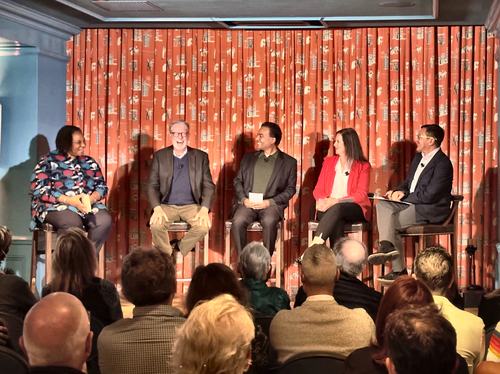
Then moderator Tim Wu turned to another cultural institution: the birthday card aisle at Walgreens. Armed with an age-themed card for each panelist, he launched a conversation that returned repeatedly to one central idea: there is no single experience of aging.
Geriatrician and UCSF School of Medicine professor Carla Perissinotto described the “absolute heterogeneity” she sees among older adults, pushing back against treating age as a diagnosis in itself. Good care, she argued, starts not with assumptions based on someone’s age, but with the individual in front of you and the life they want to lead.
Kaushik Roy, CEO of Vivalon, sees the same lesson play out there. People may come looking for a ride, a meal, a class, or help with technology. But beneath those requests are deeper needs: independence, connection, belonging, and the desire to matter. As Kaushik put it, “They want to matter. They want to be seen, they want to be heard.”
Beyond independence
The panel also challenged the idea that successful aging means remaining completely independent.
Janet Spears, President and CEO of Metta Fund, argued that our emphasis on self-sufficiency obscures something fundamental: none of us moves through life alone. Families, friends, neighbors, and caregivers all shape how well we age. Carla agreed that needing help shouldn’t be regarded as failure, particularly when our systems too often leave people isolated in the name of independence.
Caregiving makes that tension especially clear. Janet described a caregiving system that depends on both paid and unpaid caregivers; professional caregivers are often undervalued, while family members are thrust into roles for which they had little chance to prepare. She also pointed to philanthropy’s ability to go upstream, take risks, and test approaches that government and health systems may not yet support.
Putting generations back together
For Marc Freedman, Founder and Co-CEO of CoGenerate, one missed opportunity of longer lives is how thoroughly American society has separated people by age: young people in schools, working-age adults in workplaces, and older adults in senior centers and retirement communities.
A story from the audience offered another possibility. A Battery member who owns a cosmetology school described inviting older adults in so students could practice their skills. What began as a practical arrangement became genuine relationships, with older clients returning week after week as informal advisers and confidants to students decades younger.
The panel’s response: look for more places where connection already wants to happen. A shared meal, a neighborhood gathering, even a weekly hair appointment can create opportunities for generations to know and support one another.
The evening ended with Anne Marie singing “Beautiful City” from Godspell, a fitting close to a conversation that wasn’t just about older people. It was about the communities, relationships, and systems we build for all of us — because we are all already aging.
To experience the evening, watch the full Expert Night video below.
Interested in learning more about Battery Powered? Contact Member & Events Coordinator Marina Shimoyama - [email protected].