We are living longer than any generation before us, but our support systems have not kept pace.
We were raised to assume that financial security, healthcare, housing, and caregiving would form a safety net when we needed them most. That assumption no longer holds, and we don't have to look far to see the impact. Aging parents whose needs surpass what their families can sustain. A grandmother living alone. A quiet financial calculation about your own retirement. A colleague's late-career reinvention. These are not isolated experiences; they are a part of everyday life in the United States.
Aging in the U.S. Today
By 2050, nearly one in four people in the United States—roughly 82 million Americans—will be age 65 or older. The population of adults 85 and older is projected to more than double, making it the country's fastest-growing age group. As many as half of today's 5-year-olds in the U.S. are expected to live to age 100!
But as longevity increases, the gap between how long we live and how well we are supported continues to widen.
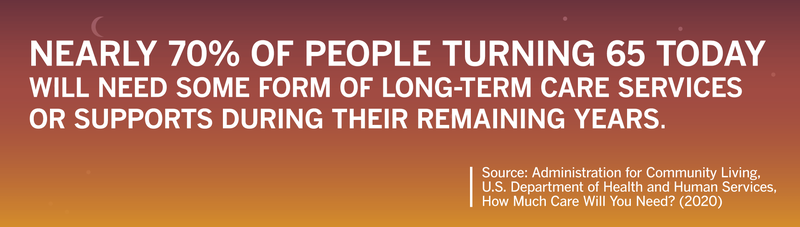
That strain shows up everywhere. Savings must now stretch across decades rather than years, and rising housing, healthcare, and everyday costs have only sharpened the pressure. More adults are working past traditional retirement age, some by choice, and many out of necessity. Health span hasn't kept pace with lifespan. Many spend years managing chronic health conditions, navigating fragmented healthcare, or caring for a spouse whose needs are growing faster than their own capacity to meet them.
Caregiving has become harder to find, as families spread out and professional care grows more expensive. Social connection is fraying, as loneliness, ageism, and technology all compound each other.
But this is only half the story. The other half is what these longer lives make possible.
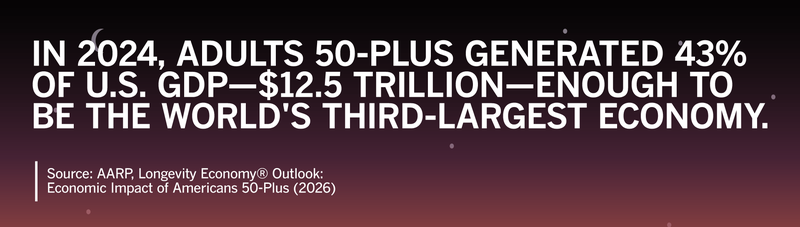
Longer lives create possibilities that didn't exist at this scale. Millions of older adults are launching businesses, mentoring, volunteering, creating art, caring for grandchildren, and contributing billions of hours of civic engagement each year. Experience and social capital do not disappear with age.
In many immigrant, Latino, Indigenous, Black, and Asian American communities, growing older has conferred authority rather than diminished it. Elders are seen as decision-makers, tradition-bearers, and stewards of family knowledge, rather than being sidelined. That model of age as a source of standing rather than a deficit, offers a glimpse of what is possible for everyone, not only for the cultures that have long practiced it.
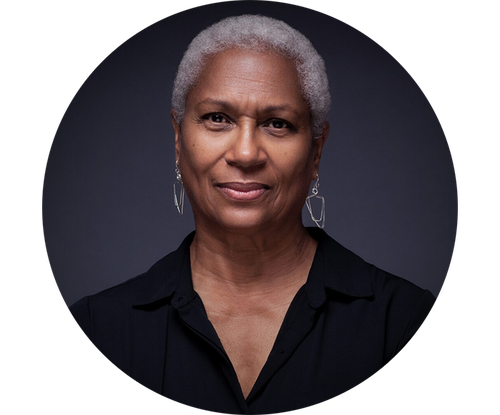
"That sense of needing a purpose doesn’t go away. And I think that’s why so many people resist retiring — because I’m not done being a participant in the world.”
~ Akaya Windwood, Lead Advisor, Third Act
These two narratives describe what it means to grow older today. One says older adults are fragile and burdensome. The other says this stage of life is profoundly generative, rich with freedom, wisdom, and untapped civic potential. Both are true at once, which raises the real question: How do we support a growing older population while redesigning our communities so longer lives become healthier, more connected, secure, and purposeful?
Aging Is a Continuum
While this initiative focuses primarily on older adults, none of us are bystanders. Many of us are already thinking not only about our parents' aging, but our own. Living meaningfully longer than previous generations means that decisions about savings, health, housing, work, and community made in our 30s and 40s carry consequences for decades to come. The life decisions and social connections that provide security and buffer loneliness at 70 are typically based on the relationships invested in at 40.
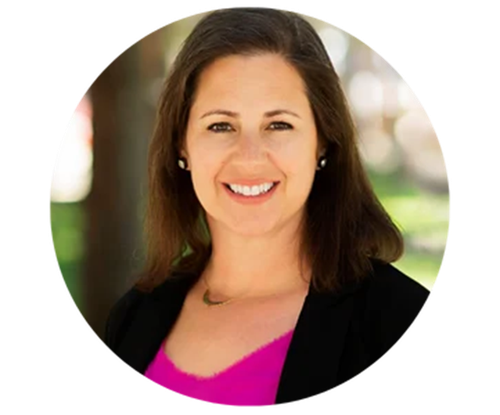
"Aging is a continuum, and the assumptions we use to describe it matters. When we say 'those old people over there,' we distance ourselves from a future that is already underway. The discrimination we practice against older adults is, in a meaningful sense, discrimination against ourselves."
~ Dr. Carla Perissinotto MD, MMA, Associate Chief for Geriatrics Clinical Programs, UCSF
Dr. Perssinotto has lived this herself. At a dinner party, an acquaintance recoiled on hearing she was a geriatrician. They replied "Ooh, that's gross," perpetuating the stigma against aging.
That reaction says less about geriatric medicine than it does about our collective discomfort with a future we are all headed toward and must find ways to embrace.
Why Now Matters
This initiative arrives at a pivotal moment of stress for organizations serving older adults who are navigating simultaneous political, structural, economic, and social pressures, including:
- Federal investments in equity-focused aging programs that are under threat;
- Structural access to basic services has narrowed for older adults without digital literacy; and
- Organizations that have served marginalized older adults for decades are fighting for their own survival.
In addition, pressures on older adults themselves have accelerated alongside the organizational stressors. Financial insecurity, digital exclusion, and the lingering isolation of the pandemic years have combined to compound the challenges. Chronic loneliness carries the mortality risk of smoking fifteen cigarettes a day.
These pressures are converging faster than any single organization can absorb alone. Yet this moment also presents an opportunity. The same demographic shifts that are exposing weaknesses in our systems invite us to rethink what it means to age well, and where philanthropy can make the greatest difference.
NEXT: Security →
We gratefully acknowledge Kevin Kahakula'akea John Fong, author of this Issue Brief. Kevin is an internationally recognized cultural translator, facilitator, and speaker. He is Founder and Principal of Kahakulei Institute, a community of facilitators dedicated to transformative justice, leadership development, and cultivating communities of belonging.