
Connection In Practice
CLICK HERE TO WATCH THE ORGANIZATION NIGHT VIDEO.
On April 23, Battery Powered members gathered in the Parlor to meet the nine organizations shaping our Combating Loneliness portfolio. These are leaders working across ages, settings, and systems to make connection easier to find and more likely to last.
We began with a reminder of what was right in front of us: the simple, increasingly rare act of gathering together in a shared physical space. From there, the evening moved quickly into the work itself, starting with efforts to remove barriers to connection for people too often left out of traditional social spaces. AbleGamers’ Jordan Kough showed how accessible gaming can create community for people with disabilities—sometimes in places as unexpected as esports tournaments and Comic-Con—turning isolation into shared experience and belonging.

From there, we turned to young people, a group experiencing some of the highest rates of loneliness. Princessa Bourelly of Entitled Futures described drop-in mental health hubs embedded in everyday community settings where young people can find connection and support before isolation deepens into crisis. Daniel Dadoun of Addiction Education Society took a different approach, translating the science of belonging into tools adolescents can use to understand how loneliness shapes their decisions, their health, and their futures. The first half closed with a shift from prevention to life’s hardest moments. Brad Wolfe of Reimagine spoke to the isolation that accompanies grief, illness, and caregiving, and how structured, shared experiences can transform pain into connection, meaning, and even purpose.
After a brief break, the focus turned to the power of gathering itself. Evan Weissman of Warm Cookies of the Revolution reimagined civic life as something people actually want to participate in—designing experiences that are inventive, inclusive, and, above all, engaging. Closer to home, Z Space’s Shafer Mazow reflected on the role of live performance as an antidote to isolation, creating shared experiences that expand empathy and help people see, and be seen by, others.
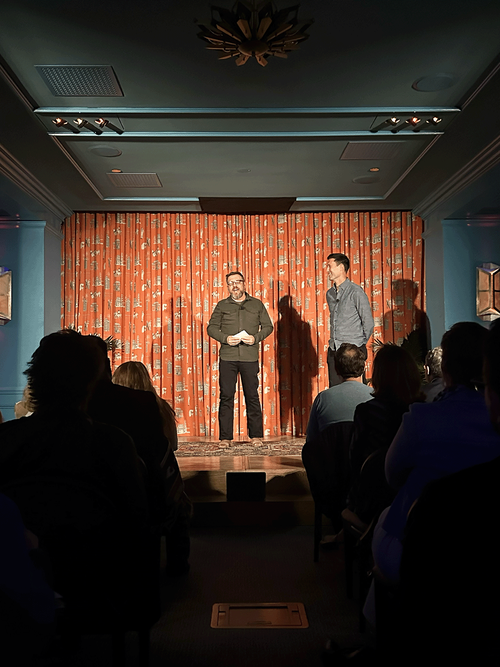
The evening then shifted from the Mission District to Maine, where Community Plate and the Relational Tech Project are working together to spread a deceptively simple idea: that sharing food and stories can spark lasting connection. Karl Schatz and Josh Nesbit described how potluck suppers, paired with open-source tools and community infrastructure, can grow into networks of neighbors who continue to gather, support one another, and build community over time.
That idea—that connection can compound—set the stage for the final presentation. Jillian Racoosin of the Foundation for Social Connection zoomed out to the national level, describing efforts to build the field of social connection itself: translating research into practice, mobilizing cross-sector action, and positioning connection as a public priority essential to health, resilience, and civic life.
As always, the Open House that followed gave members the chance to go deeper, asking questions, and connecting directly with the leaders behind the work.
Next comes Allocation Week, where members will direct Battery Powered’s funding across this portfolio. It begins with Drinks & Discourse on May 18 and culminates in Allocation Night on May 27, continuing the cycle of learning, connection, and collective giving that defines the Battery Powered experience.